Procurement Apps

Ivalua
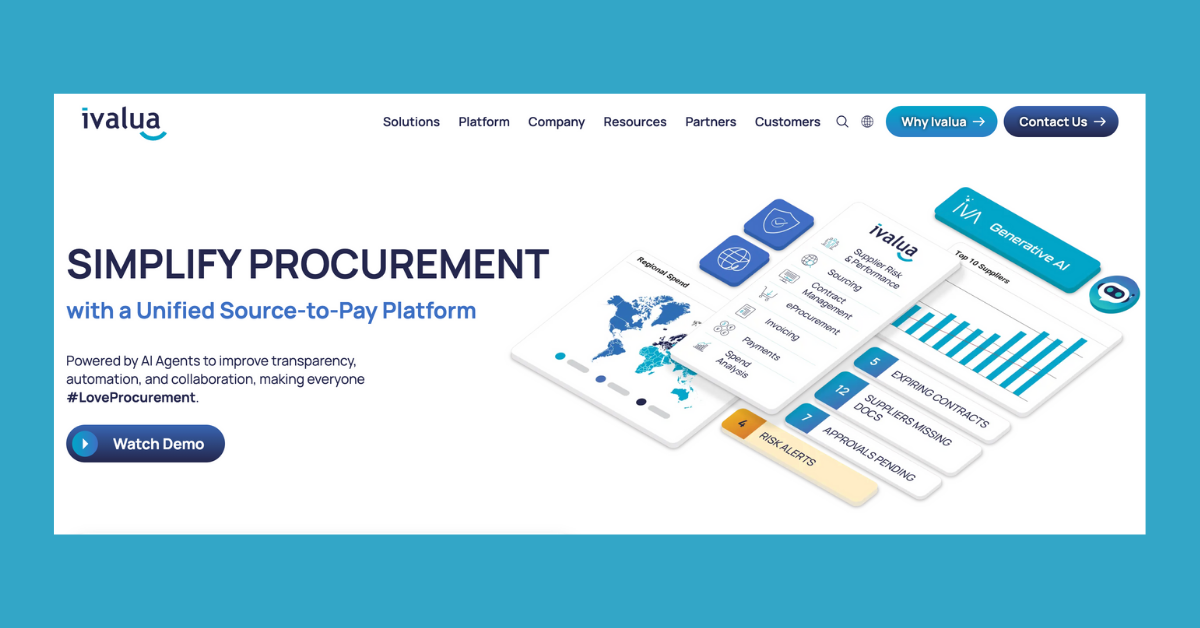
A configurable source-to-pay platform covering sourcing, contracts, supplier management, and invoicing for large enterprises.
A configurable source-to-pay platform covering sourcing, contracts, supplier management, and invoicing for large enterprises.
Ivalua is a highly configurable procurement platform meant to centralize the entire source-to-pay process — sourcing, contracts, supplier management, purchasing, and invoicing — in one system instead of a patchwork of tools. It's mainly used by mid-market and enterprise organizations with complex procurement needs and strict compliance requirements, particularly teams that want flexibility without rebuilding their existing processes from scratch. The platform's strength is exactly that configurability: deep supplier management, broad integration options, and a genuinely capable procure-to-pay module including PO flip, plus one place that reduces fragmentation across procurement functions. Practitioner discussion of Ivalua tends to split along a predictable line: consultants and admins who've configured it well generally speak highly of its flexibility, while end users more often describe it as not especially intuitive, with the complaint usually staying vague rather than pointing at a specific broken feature. A recurring friction point shows up during migration from legacy setups — teams used to creating purchase orders directly in an ERP like SAP tend to find the extra step of raising a purchase requisition in Ivalua tedious at first, even once they understand why it exists. The same flexibility that makes it powerful also makes setup and ongoing administration heavier, with a real learning curve for new users and admins alike.
Ivalua fits large enterprises that need deep procurement control, complex approval workflows, and end-to-end visibility across global operations. It's a common recommendation for organizations that want a genuine end-to-end source-to-pay suite rather than stitching together point tools, and it's frequently named alongside Coupa and SAP Ariba as a credible full-suite alternative. It's built for teams with mature processes, heavy compliance obligations, and the internal resources to plan change management properly — adoption tends to go smoothly when that planning happens early, and roughly when it doesn't. It's not a fit for a lean team that wants purchasing structured quickly with minimal training overhead.
| Feature | Supported | Notes |
|---|---|---|
| Requisition & Intake | Yes | Strong for fragmented intake and multi-step approvals, though setup takes real admin time. |
| Sourcing | Yes | Covers indirect, direct, and services sourcing with flexible event templates. |
| Contracts | Yes | Useful where contract renewals or obligations tend to slip through the cracks. |
| Purchasing | Yes | Highly configurable, well suited to compliance-heavy environments with complex catalogs, including PO flip for the PO-to-invoice cycle. |
| Invoicing & AP | Yes | Strong pre-matching automation for high invoice volume. |
| Spend Analytics | Yes | Gives leadership visibility across categories and suppliers. |
| Budget Controls | Yes | Shared oversight for finance and procurement, with configuration overhead. |
| Supplier Management | Yes | Built for organizations managing thousands of suppliers with risk scoring and scorecards. |
| Integrations | Yes | Strong ERP alignment once implementation planning is done. |
| Usability | Mixed | Admins and consultants rate it well; end users more often describe it as not intuitive, especially right after migrating from a legacy ERP workflow. |
Here are the top pros and cons for Ivalua based on real-user feedback from verified reviews.










Ivalua manages the full procurement lifecycle — sourcing, supplier management, contracting, purchasing, invoicing, and analytics — in one platform for organizations with complex, global procurement needs.
No. Ivalua is a procurement and spend management platform that integrates with ERPs like SAP, Oracle, and Microsoft Dynamics, adding sourcing and supplier controls on top of ERP data.
Ivalua uses enterprise-level custom pricing based on modules, user count, implementation scope, and transaction volume — typically a significant annual commitment.
Zeiv addresses a much narrower slice of the same lifecycle — intake, approval, PO issuance, and invoice pre-approval — without the sourcing, contracts, or full configurability layer Ivalua is built for.
Feedback is mixed and tends to split by role. Admins and implementation consultants generally rate it well, while end users, especially those moving off a legacy ERP workflow, more often describe it as not particularly intuitive at first. Rollouts that treat change management as its own workstream tend to see smoother adoption.
It's frequently named as a credible full-suite alternative to both, particularly for organizations that want one platform covering the entire source-to-pay process rather than a collection of point tools.