Procurement Apps

Procurify
A mid-market procurement platform for requests, approvals, purchase orders, and budget visibility.
A mid-market procurement platform for requests, approvals, purchase orders, and budget visibility.
Procurify is built to bring purchasing under control for growing companies that are still running requests through email threads and spreadsheets. It centralizes requests, approvals, purchase orders, and budget tracking into one dashboard, mainly for operations and finance teams at small and mid-sized businesses who need visibility into what's being bought and why. Practitioner discussion of Procurify is fairly consistent: the interface is clean and requests-to-approvals basics work well, and it's often described as a solid, lower-cost starting point compared to enterprise suites like Coupa. Where it draws more mixed feedback is depth — supplier management is generally seen as lighter than larger platforms, without much of a supplier-network effect, and it lacks the guided-buying and advanced-insights layer that Coupa or Ariba build in. Companies that start on Procurify while small sometimes find they outgrow it as organizational complexity increases, at which point the honest question becomes whether to move to a heavier suite or keep Procurify for indirect spend and push complex or direct-materials purchasing into an ERP instead. The catch with any switch, Procurify or otherwise, is that the hard part is usually the ERP integration itself, not the procurement tool on top of it.
Procurify suits mid-market companies, roughly 50 to 1,000 employees, that want structured purchasing across departments without taking on ERP-level complexity, particularly where NetSuite or QuickBooks integration matters. It's a reasonable starting point for a smaller company that needs P2P basics covered without enterprise pricing, but it's a weaker fit once an organization spans multiple entities, many locations, or a genuinely complex approval hierarchy — those needs tend to outgrow what Procurify is built for. It's also not built for inventory or direct-materials management; teams handling those typically keep that workflow in their ERP and use Procurify for indirect spend only.
| Feature | Supported | Notes |
|---|---|---|
| Requisition & Intake | Yes | Standard request creation and management. |
| Purchasing | Yes | Purchase orders, blanket POs, mobile approvals, and delegation support. |
| Invoicing & AP | Yes | OCR capture with 2-way and 3-way matching. |
| Spend Analytics | Yes | Covers real-time budget reporting well, but lacks the deeper insights and guided-buying layer that Coupa or Ariba offer at enterprise scale. |
| Budget Controls | Yes | Real-time tracking across unlimited categories. |
| Inventory | Limited | Not built for inventory or direct-materials management; teams typically handle that in their ERP and use Procurify for indirect spend. |
| Supplier Management | Limited | Vendor import and document storage, but noticeably lighter than larger platforms, with no real supplier-network effect. |
| Receiving | Limited | Functional but thin; often requires accurate supplier PO numbers to work well, and some teams export to CSV to build their own reporting on top of it. |
| Integrations | Yes | QuickBooks, punchout catalogs, and a limited set of ERPs. |
Here are the top pros and cons for Procurify based on real-user feedback from verified reviews.
For a very small company, cost can be a real barrier rather than an afterthought — some users cite a practical minimum in the $300 to $500 per month range before Procurify makes financial sense, even before adding recent licensing increases.



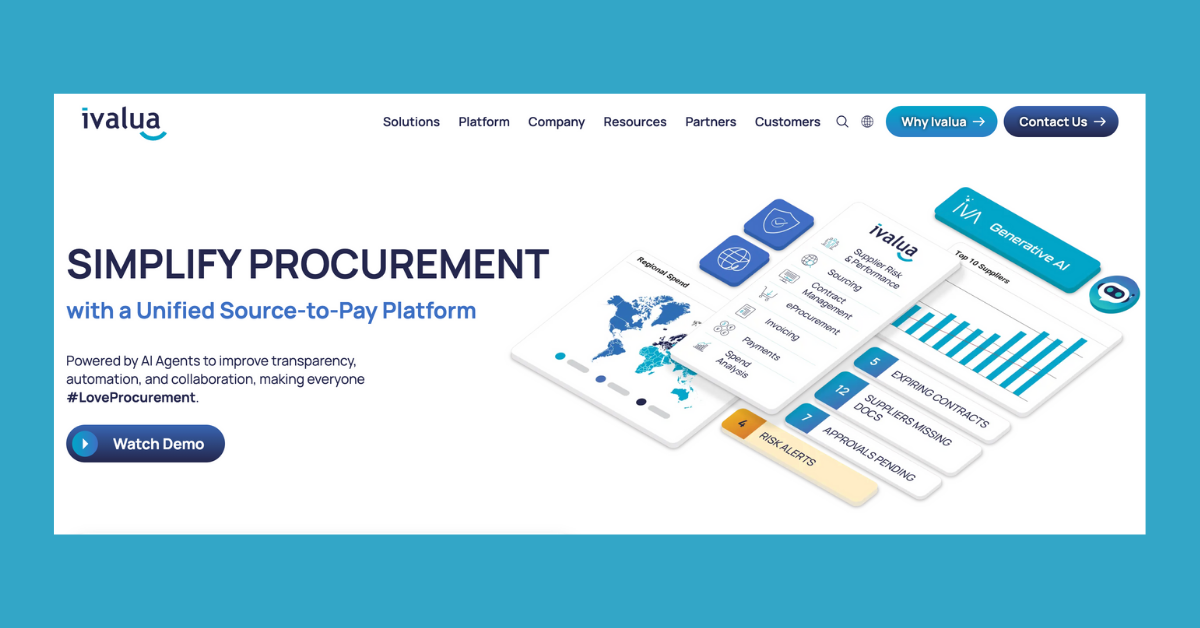






Procurify manages company purchases from request through approval to PO creation, giving finance and operations teams visibility into purchasing activity and budget status across departments.
Pricing is tiered based on user count and modules, with custom pricing for larger organizations.
Employees submit purchase requests, managers approve based on routing rules, and finance converts approved requests into POs, tracking delivery and invoicing from there.
Zeiv covers similar ground — intake, category-specific approvals, PO issuance, and invoice matching — as a smaller front-end layer designed to hand off cleanly to whatever ERP you already run.
Pricing is tiered, but practitioners cite a practical floor around $300 to $500 per month before it makes sense for a very small company, and some report recent per-seat licensing increases pushing that cost higher.
Both cover core requisitions, approvals, POs, and AP automation. Procurify tends to be the stronger choice for organizations scaling across multiple locations or cost centers with deeper ERP integration and approval routing, particularly on NetSuite or QuickBooks. Precoro is generally the faster, lighter option when the priority is getting live in weeks with minimal setup and simpler approval logic is acceptable.
Possibly, especially once you span multiple entities or a genuinely complex approval hierarchy. It's commonly described as a strong starting point for a smaller company that later needs to either move to a heavier suite or keep Procurify for indirect spend while routing direct materials through an ERP.